
You know that feeling? For years, 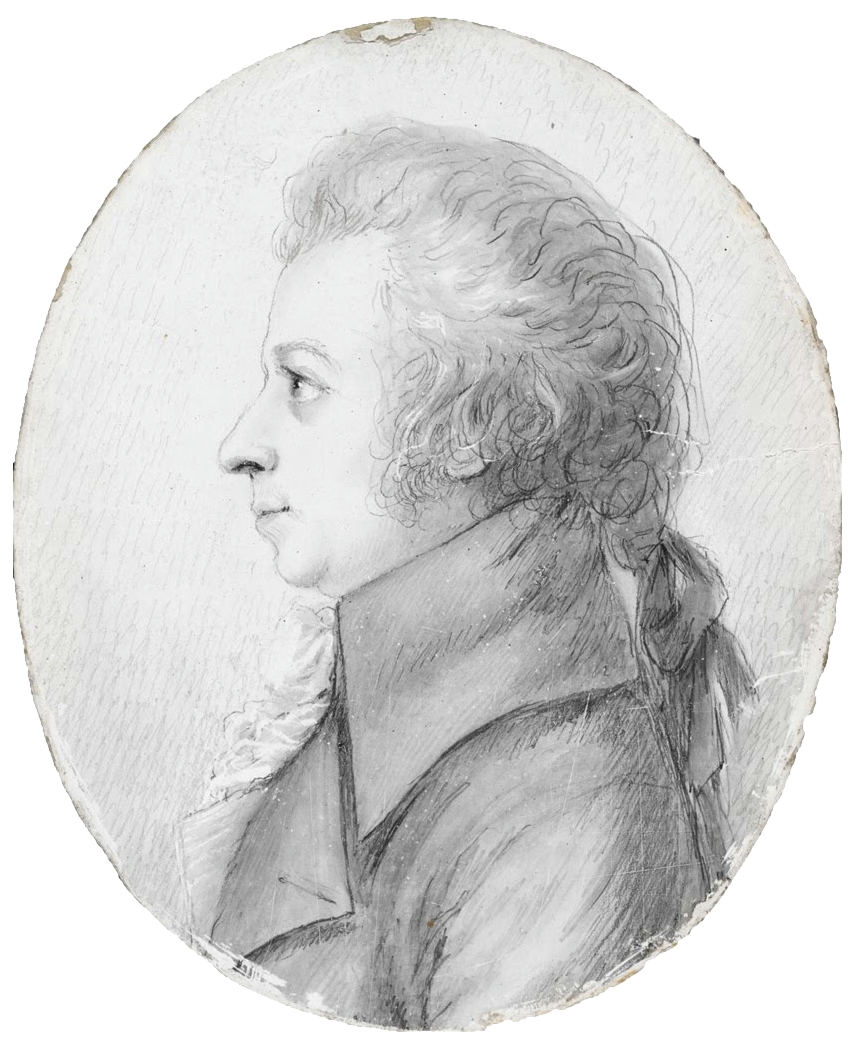 you’ve been familiar with a painting or a music piece, looked at it or listened to it countless times – and then you notice a detail you hadn’t seen before, giving your view of the artwork a new direction. That’s what happened to me as editor when I had on my desk my favourite Mozart piano concerto (No. 27, B-flat major, K. 595). But first things first.
Mozart’s piano concertos are sporadically published by G. Henle Verlag – most recently, it was the Coronation Concerto’s turn. And now comes Mozart’s last and perhaps most moving concerto, the one in B-flat major, K. 595 (HN 7534, HN 1534). Our small series (not intended, incidentally, to be exhaustive) seeks out world-class pianists to contribute fingerings and compose cadenzas and lead-ins. For K. 595, that was Piotr Anderszewski, but more on that later. This new edition’s editor is Wolf-Dieter Seiffert, our former publishing-house director as well as Henle blog author, who is concurrently a renowned Mozart specialist.
Over the years as a house editor, I’ve had the pleasure of overseeing Dr Seiffert’s Mozart editions. And with every (really every!) edition I have monitored, exciting philological discoveries were there to be made. Anyone who thinks that everything has already been said about Mozart is vastly mistaken! This is partly owing to altered perspectives in Mozart research (first editions from Mozart’s lifetime are now taken much more seriously than was previously the case), but also because once-expressed hypotheses are occasionally accepted as valid truths to be passed down through many generations of researchers. These supposed truths often, however, do not stand up to historical findings. Thus, Dr Seiffert’s edition of the standard work K. 595 has in store numerous surprises!
We usually assume that Mozart composed his piano concertos for his own performances, for concerts or “academies”, as they were called at the time, where he himself sat at the piano. This assumption was also made for his last piano concerto (see, for example, the German Wikipedia article about this concerto: “On March 4, 1791, it was performed for the first time at an academy held by clarinet virtuoso Johann Joseph Beer in the concert hall of court caterer Ignaz Jahn in Himmelpfortgasse, with Mozart himself playing the solo part.”). But no evidence existed to support such a performance. In his foreword, however, Dr Seiffert very convincingly argues, in my opinion, that conceivable is also another scenario. K. 595 was obviously performed during Mozart’s lifetime, since extant are two cadenzas and a lead-in written by him. He would certainly never have committed these to paper “in reserve”, but only for a specific concert situation. Yet, why would he have detailed for himself these improvisational elements, as he certainly never played cadenzas and lead-ins from a written score. Isn’t it more likely that Mozart wrote them down for someone else?
And something else striking is that the piano part is relatively easy to play; in any case, it is not a virtuoso concerto. (Whilst editing, I was surprised to discover how well everything fits the hand; I repeatedly caught myself thinking: “I, too, could play that” – which, naturally, I’d not want to impose on an audience!) Furthermore, K. 595 was published in the composer’s lifetime, a circumstance shared by only three other Mozart piano concertos, namely, K. 413–415. These three earlier concertos have much in common with K. 595: that they were published, the piano part is moderately difficult, and the orchestra is relatively small.
Was this possibly a sales strategy? Did Mozart compose these concertos, including K. 595, not for his own performance, but with a view to publication? And with these features, did publisher and composer want to appeal to the widest possible range of buyers? We cannot answer this question with certainty, but Dr Seiffert’s arguments shed a whole new light on the circumstances surrounding the creation of Mozart’s final piano concerto.
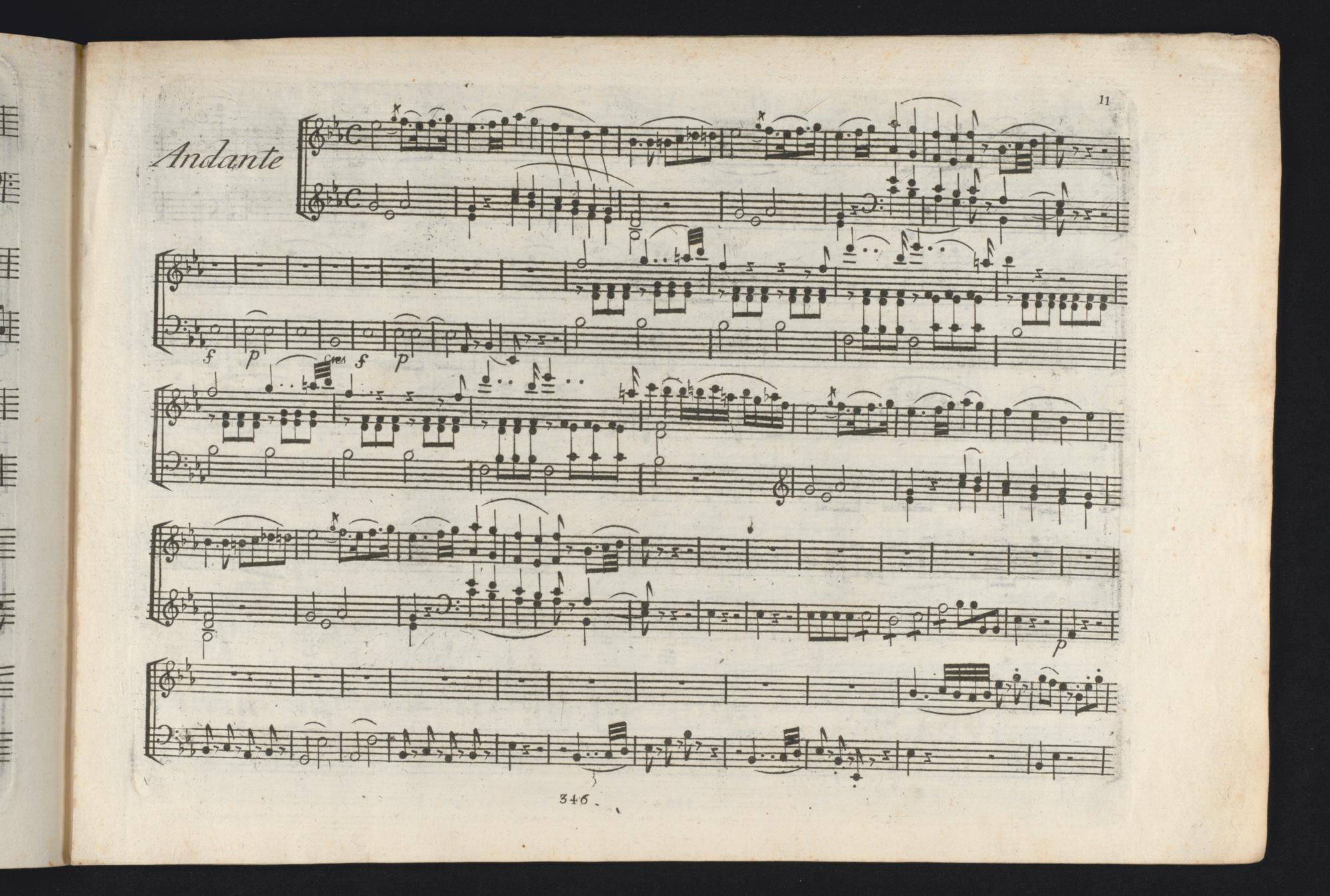
Mozart Piano Concerto K. 595, First Edition, 2nd movement, A-Sm shelfmark: Rara 595/3 XL
This is in itself exciting enough, though certainly that view also has direct consequences for the edition. For if Mozart already had in mind the first edition, this source gains significantly more weight than the traditional fair-copy autograph score. Dr Seiffert has now, for the first time ever, comprehensively evaluated this first edition. Fortunately, the first edition turned out to differ only slightly from the autograph. (Had it been otherwise, that would have had far-reaching consequences for the edition: repeatedly deciding against the autograph in favour of the print is an approach not easy for a Mozart philologist!) In some places, however, the first edition contains convincing variants, which Dr Seiffert explicates in his critical report. For example, the slow movement’s tempo indication in the printed version is Andante in 4/4 time (see illustration above), instead of the autograph’s familiar Larghetto in alla breve (2/2 time). In another place, the first edition shows a bowing differing significantly from the autograph, albeit equally convincing:
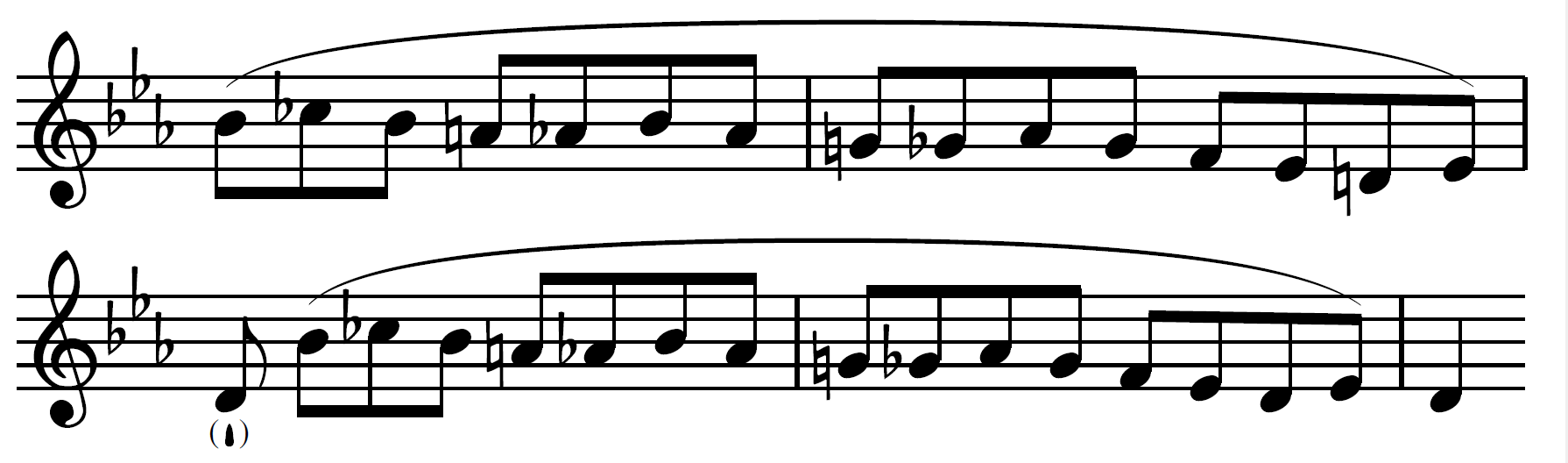
Movement II, mm. 74–78, edited version from the autograph
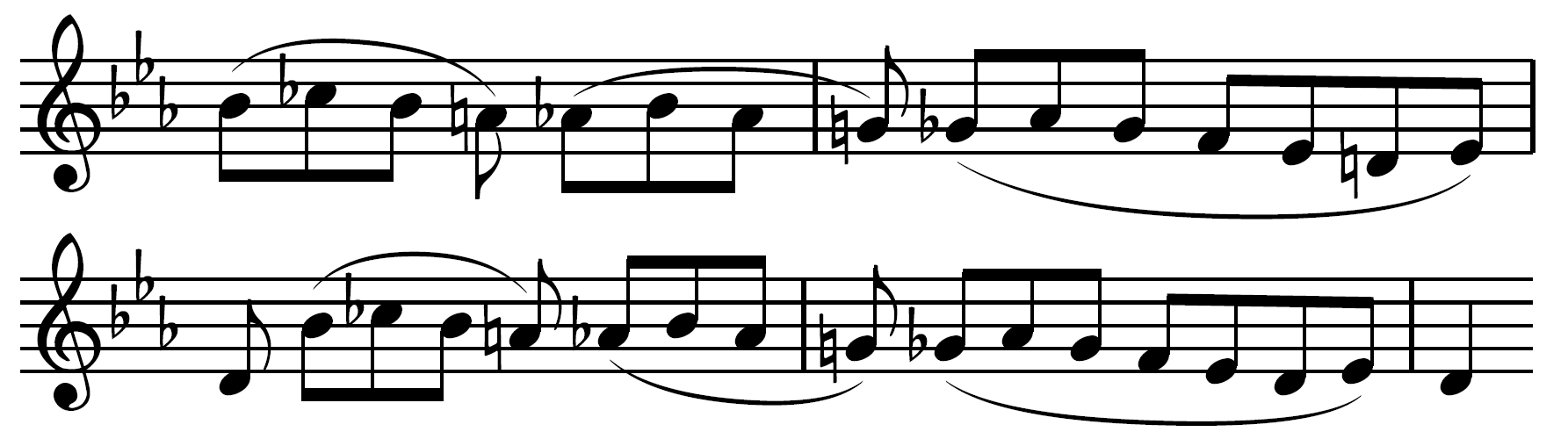
Movement II, mm. 74–78, first-edition version
We assume that the engraved first edition was based on the première’s parts. Could such deviations therefore reflect the work’s rehearsal for its first performance, and could they consequently be indirectly traced back to Mozart?
Dr Seiffert addresses all these questions and explains them in detail in the concomitant texts. Several cherished truths are critically examined for their substance – and we begin to read the familiar music text with new eyes and hear the admired music with new ears (or play it with fresh fingers). A re-encounter that opens up new perspectives.
Piotr Anderszewski, photo by Simon Fowler
Finally, I return to Piotr Anderszewski. Our new edition will not only include the piano and orchestral parts as a pocket score, but also a practical piano reduction for rehearsal.
In this piano reduction Piotr Anderszewski has shared with us his tried-and-tested, sophisticated and ergonomic fingering. He did not have to prepare any cadenzas, for, as mentioned above, Mozart himself composed two cadenzas and a lead-in that are also part of our Urtext edition. Since only in the third movement for a single lead-in is there no autograph material, Piotr Anderszewski suggests here a small improvisational transition.
For the second movement, he has also added wonderfully restrained, stylistically suitable ornamentation. Why is this necessary? We know that in Mozart’s time, slow movements were embellished; i.e. long sustained notes, interval leaps, repeated passages, or motifs were ornamented on the spot. This improvisational freedom has unfortunately been largely lost today. Therefore, our edition now contains specific suggestions for such ornamentation, which can either be adopted or also inspire performers themselves to become creative. Here is an example:
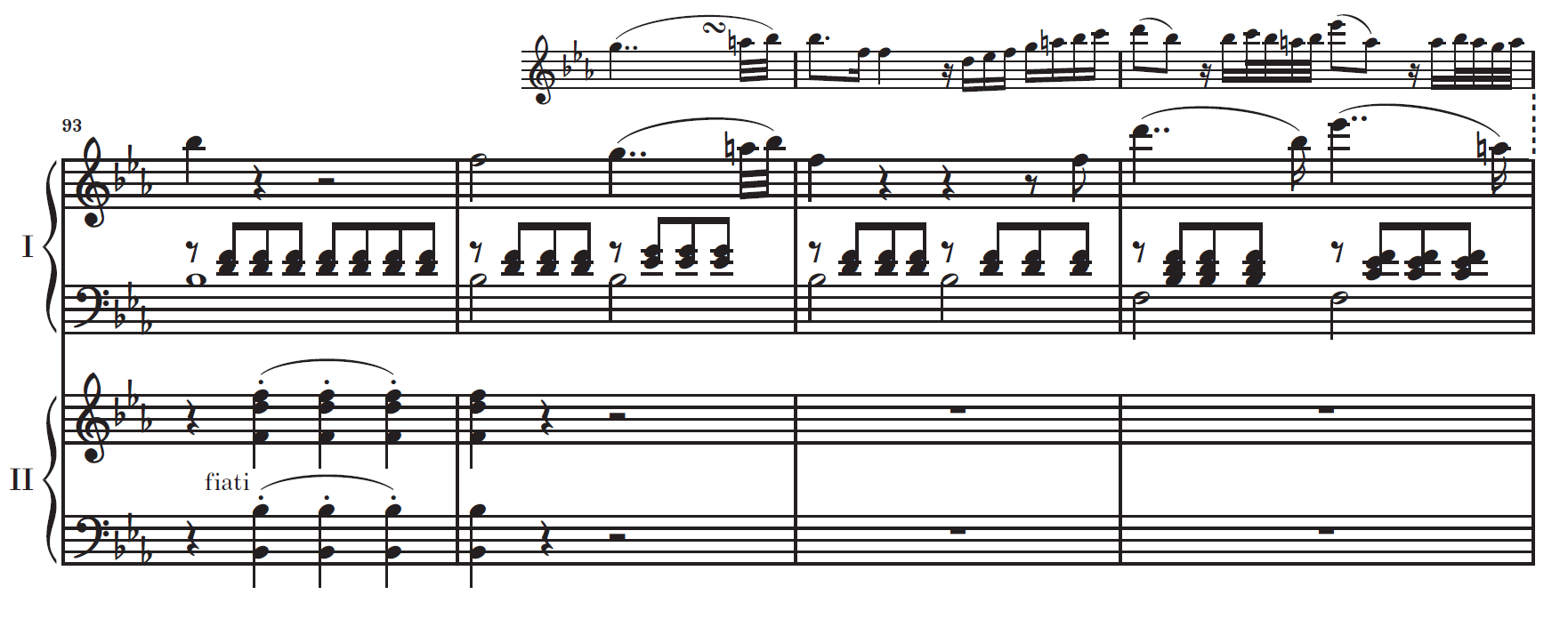
Movement II, mm. 93–96. Piotr Anderszewski’s ornamentation suggestions for the right hand are shown on the ossia stave
This new edition of Mozart’s last piano concerto is therefore inspiring in every respect. But in closing, a word of warning: the edition introduced here is, exceptionally, not yet available. Should you feel the urge to buy it, which we wholeheartedly support, we must ask you to delay this impulse until the end of January 2026. That is when K. 595 will be available from Henle Verlag. As is well known, anticipation is half the fun… Many thanks for your patience!