
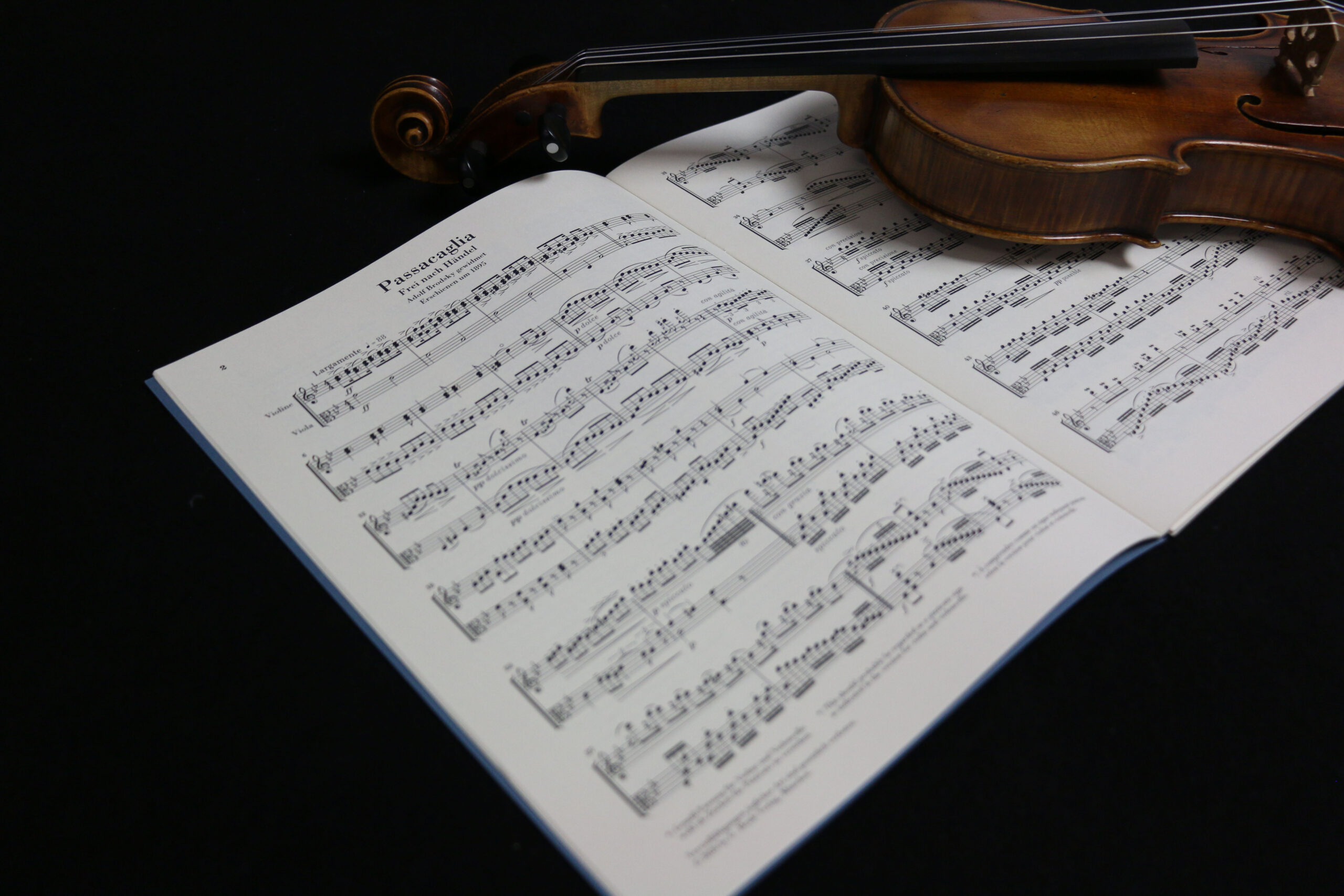
 Last fall, I attended a concert in the Dachau Palace. Performed amongst other pieces was Mozart’s Sinfonia concertante in E-flat major for violin, viola, and orchestra, K. 364 (320d). The two young solo string players were delightfully good, and it was clear that they wouldn’t be allowed to leave the stage without an encore. So, they both picked up their instruments again, and the violist also took the floor to announce, casually: “As an encore, we’ll play just a bit of Passacaglia.”
This bit of Passacaglia is one of the most effective pieces that a string duo can play. Originally composed for violin and viola, the version for violin and cello is no less popular. There are many recordings on YouTube, often featuring here the greatest in their field. Itzhak Perlman and Pinchas Zukerman, Julia Fischer and Daniel Müller-Schott, the Capuçon brothers, and others.
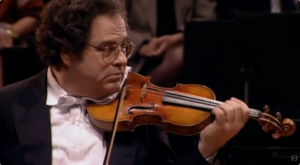
But who actually wrote this bit of a Passacaglia? The composer of the original version is Johan Halvorsen (1864–1935), although in it is also a fair amount of Handel, more on that in a moment. The version for violin and cello was subsequently arranged by the Russo-American violinist and conductor Mikhail Press.
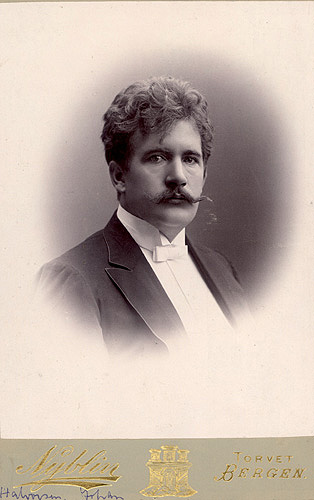
Johan Halvorsen (1864–1935)
Halvorsen is one of the most important Norwegian composers of the post-Edvard Grieg generation, and his complete works comprise around 170 compositions – from lieder and chamber music to three symphonies and stage works. He was one of the most renowned conductors of his time, though he first surfaced in the early phase of his career primarily as a violin virtuoso. He had earned his living with this instrument since the age of 15. As of 1884 he studied initially at the conservatory in Stockholm (there being no significant music academy in Norway at the time) and later in Leipzig with the famous Russian violinist Adolf Brodsky.
In a way, Halvorsen’s Passacaglia is thus a very personal work. Together with his duo partner Karl Johannessen (viola), Halvorsen himself performed the world premiere on 9 January 1894. The piece quickly enjoyed great popularity, and even Edvard Grieg, to whom Halvorsen submitted it for appraisal, apparently nodded his head approvingly. And so, it’s not surprising that the Copenhagen publisher Wilhelm Hansen was happy to publish the Passacaglia. Halvorsen’s orchestral work Entry March of the Boyars had already been very successful, and Hansen sensed another bestseller. He was not disappointed.
When you first hear the Passacaglia, you immediately think: That’s familiar – only it’s somehow different. And those who think so are quite right. Halvorsen chose the famous passacaglia from Handel’s Harpsichord Suite No. 7 as the basis for his composition. The four-bar theme is taken from this work, making the recognition effect inevitable.
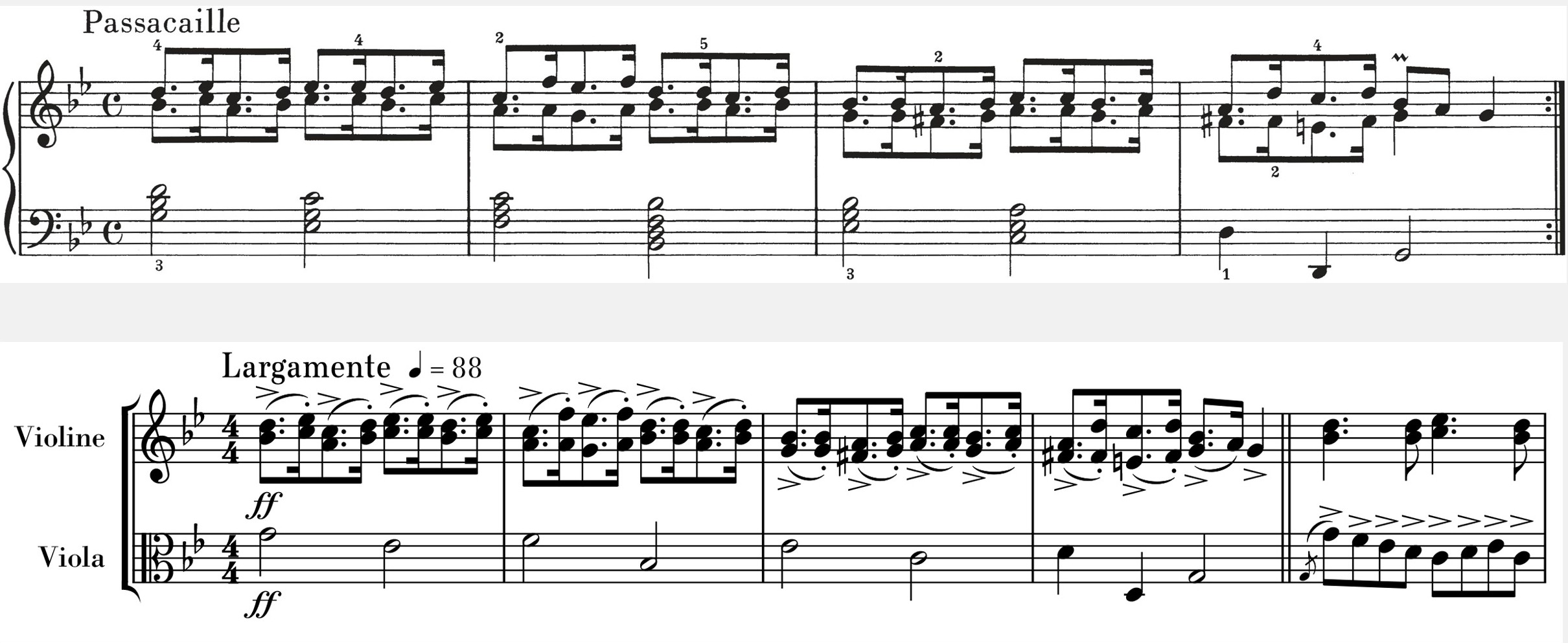
Four-bar passacaglia theme in Handel (above) and in Halvorsen (below),
Henle Urtext HN 336 and HN 1670
Classifying Halvorsen’s Passacaglia as a mere arrangement would, however, be a mistake. Only the theme and the first three variations could be described as a re-instrumentation of Handel’s original. But then Halvorsen increasingly distances himself from it – continuing through no fewer than 17 further variations. The music becomes more independent, denser, more virtuosic, more effective.
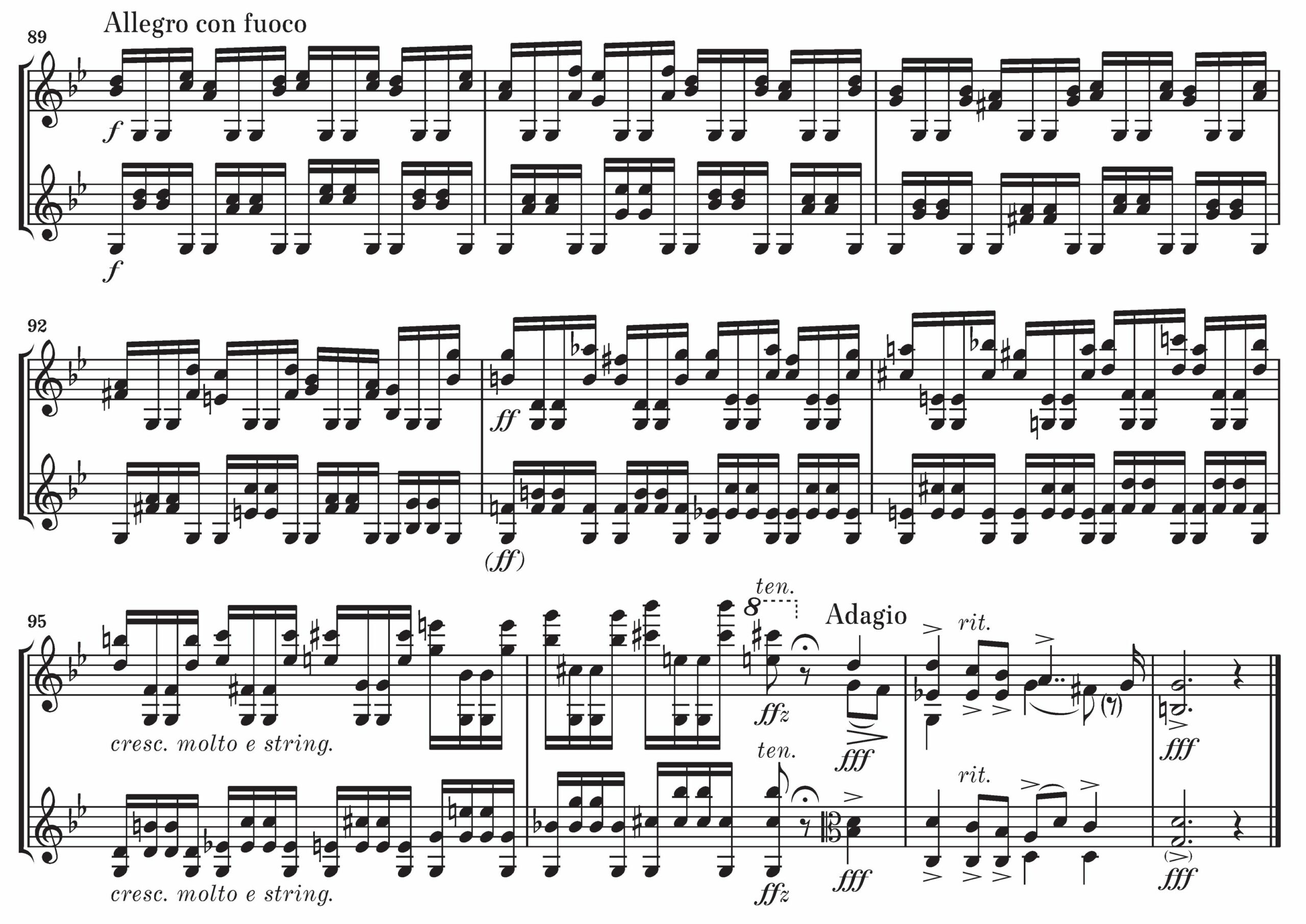
Passacaglia, virtuosic finale, Henle Urtext
From the eleventh variation onward, Handel’s original work is barely discernible, especially since, in comparison to the model, Halvorsen introduces an important new feature: his Passacaglia is not composed for one solo instrument, but for two equal partners, the violin and the viola. The result is a masterfully produced dialogue.
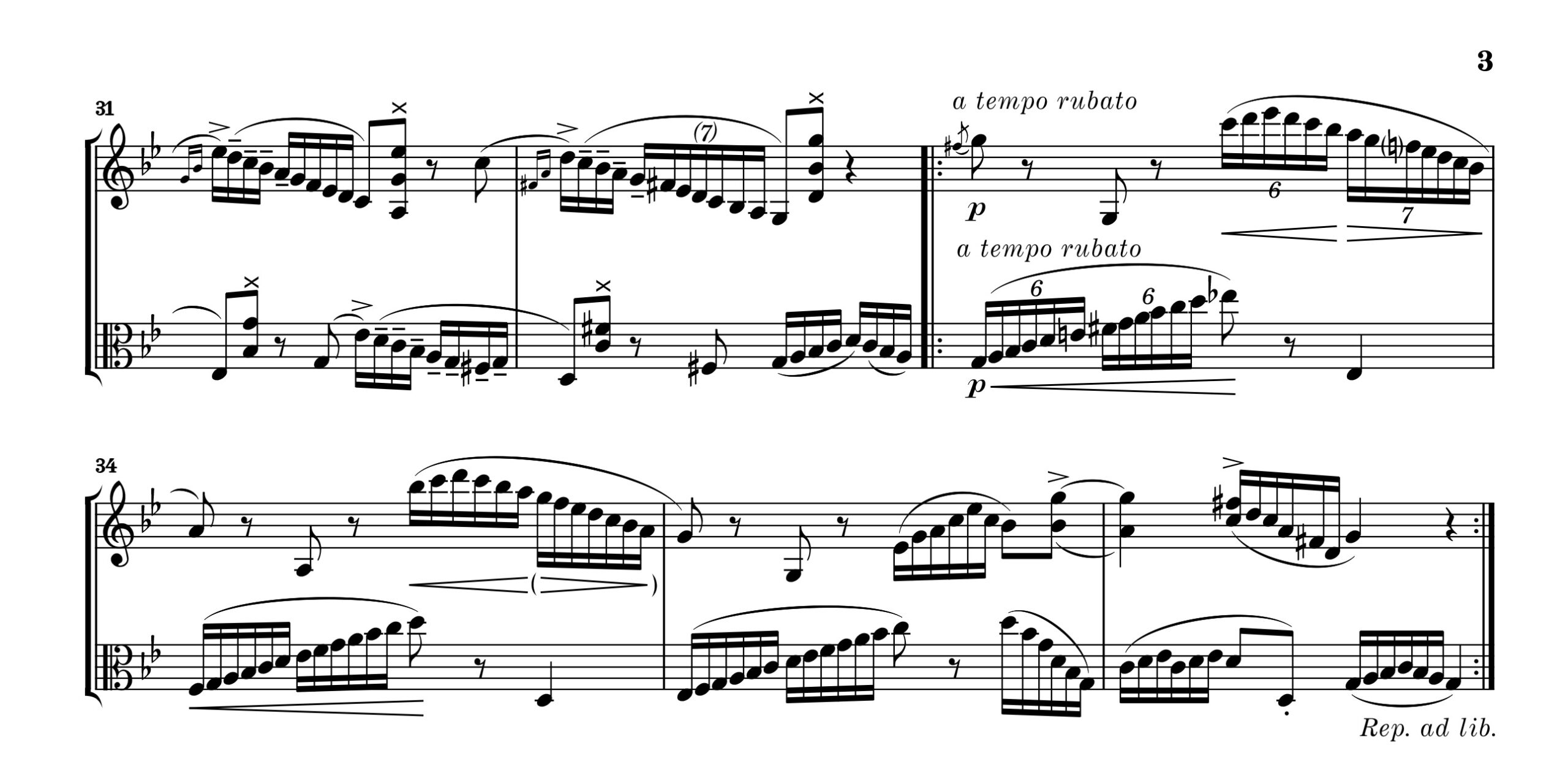
Passacaglia, intense dialogue between the two parts, Henle Urtext
But that is not the only dialogic aspect of this piece. Added here is the fact that with this work, Halvorsen transfers a Baroque theme into the 19th century, thus integrating styles and epochs into a lively network of relationships – a compositional framework originating in the Baroque period and his own personal romantic-virtuosic tonal language. Musicologist Øyvin Dybsand from the University of Oslo calls this a “fascinating musico-historical dialectic”. He has embellished our Urtext edition with a preface that only he could write, for who else could draw on decades of intensive engagement with Halvorsen’s work? It was with Dybsand, an expert on Halvorsen’s biography, stylistics, and sources, at our side, that made this Urtext edition possible.
Soon after the project began, the question arose as to whether in our edition the Passacaglia should be accompanied by its sister work. In 1898, Halvorsen, riding the wave of the Passacaglia’s success, wrote a Sarabande con Variazioni for the same instrumentation. Again, for violin and viola, modeled again on Handel – this time on his Harpsichord Suite No. 11 (see HN 472).
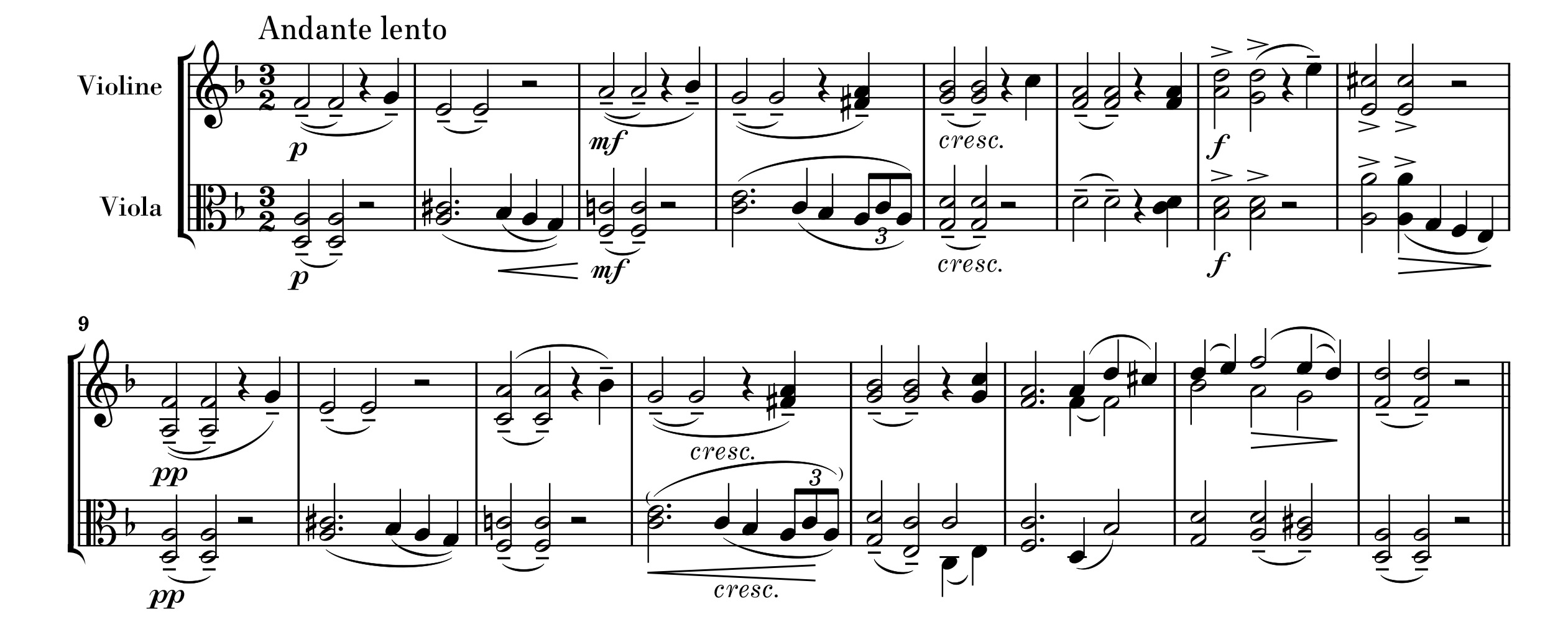
Sarabande con Variazioni, 16-bar theme, Henle Urtext
Halvorsen may not have achieved here quite the Passacaglia’s conciseness in his treatment of the 16-bar theme. This is perhaps why the Sarabande did not become as popular. But today, that only makes this piece all the more a true discovery – and in turn an extremely effective repertoire addition, allowing a duo to display immense virtuosity. That’s why we at Henle Verlag have brought these two works together for the first time in an Urtext edition.
Sarabande con Variazioni, Stella Chen (violin) and violinist Matthew Lipman (viola), 2023
We gave considerable thought to the best presentation of this music. What it should be played from when not performing from memory like the two spirited young men at Dachau Palace? We consulted several musicians.
The prevailing opinion was clear: performance scores were the undisputed favourite. This way, there is always a clear overview of where each instrument is playing at any given moment. Not only does that facilitate coordination, it also fosters understanding of this richly interwoven composition.
Of course, this entailed for us challenges, especially for our music engraver. Performance full scores have more page turns than individual parts would have. But we believe that with all the means at our disposal, we have found a very good solution by combining the possibility of using fold-out panels with the clarity of the Henle notation system. And so, under Henle number 1670, there are now three full scores for each individual piece. One unannotated, one for the violin, and one for the viola. All from a single hand, because the annotations come from the Norwegian violinist and violist Henning Kraggerud, who immersed himself in the music with all his instrumental devotion and indicated in many places not just one but several practical playing approaches – additional suggestions by Kraggerud are located within square brackets.
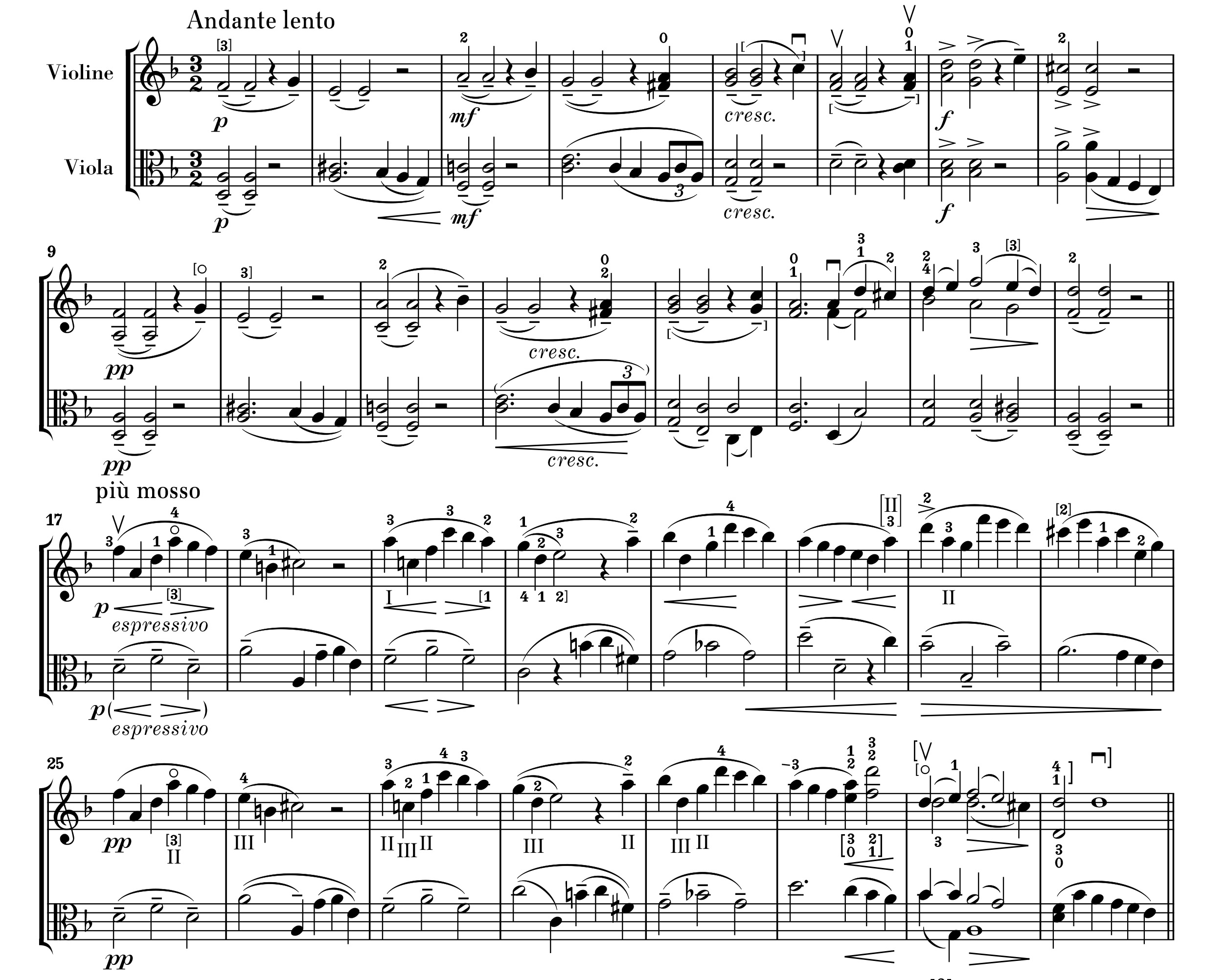
Sarabande con Variazioni, theme and first variation, violin performance score, markings by Henning Kraggerud
For those approaching this demanding music for the first time, that is an excellent aid. Those who don’t need it will find their bliss in the unmarked full score – but would still do well to take a look now and then at how the great Kraggerud plays it. But anyone wanting to know how the great Halvorsen himself placed his fingers on the strings, can view the original markings in the Henle Library app. You can’t ask for more than that!
Passacaglia, version for violin and violoncello, Henning Kraggerud (violin) and Franz Kraggerud (violoncello), Hellerup Kammermusikforening 2024