
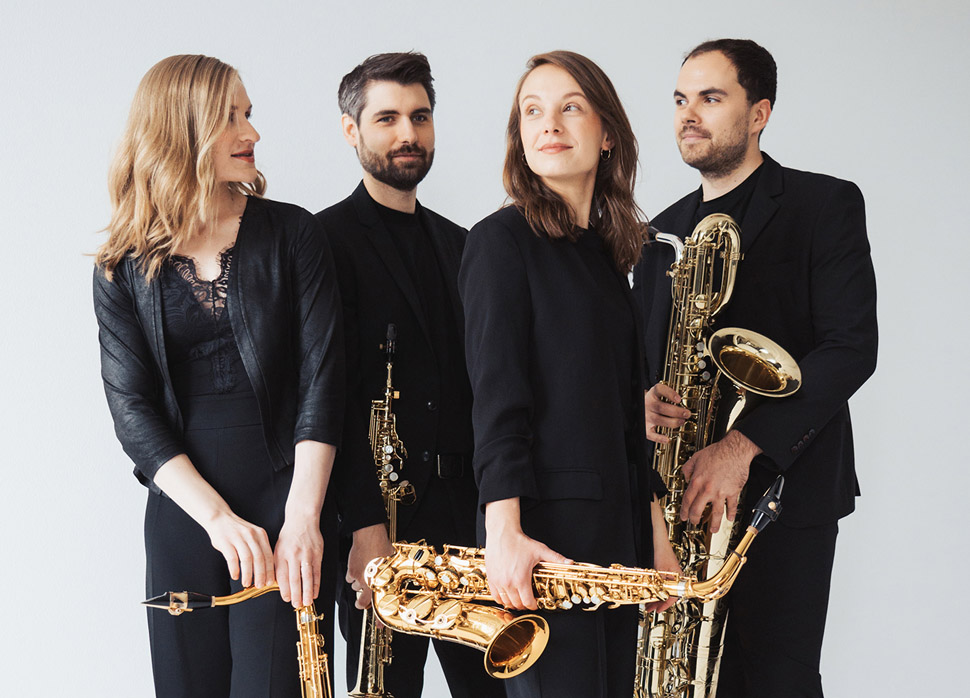
Arcis Saxophone Quartet (© arcisvisuals)
Some time ago, a young Munich ensemble surprised us with an unusual request: the Arcis Saxophone Quartet, winners of numerous awards and at home on international stages, proposed a joint edition project involving a repertoire piece that for decades saxophonists worldwide have been forced to play from a single old, flawed edition. A case for Henle!🕵️♂️
After intensive archival research and source comparisons, we have now published this year the result of this laborious editorial work: the first Urtext edition of Alexander Glazunov’s Saxophone Quartet in B-flat major, op. 109 (HN 1046), composed in 1932, which is, in a sense, the founding document of this genre and remains to this day one of the most important of all compositions for classical saxophone.
As unusual as the saxophone may seem within the context of the usual Henle repertoire, we have long had in our catalogue two important compositions for alto saxophone: Erwin Schulhoff’s Hot-Sonata (HN 1369) and Claude Debussy’s Rhapsodie (HN 989). A veritable saxophone quartet (i.e., consisting of soprano, alto, tenor, and baritone saxophones) was for us an unusual project, though not problematic, given the great expertise of our editors, the Arcis Saxophone Quartet.
Thanks to the four musicians’ excellent contacts within the extensive saxophone scene, we were jointly able to locate globally and study a multitude of sources for Glazunov’s composition, an absolute necessity for eradicating the shortcomings of the only edition available to date: the 1959 first edition, published after Glazunov’s death and without his supervision.
After intensive collaborative research, numerous manuscript documents were located in Glazunov’s estate at the St. Petersburg State Museum of Theatre and Music, including the composer’s personal sketchbooks, containing the work’s complete first draft in short-score form (similar to a piano reduction) – an extremely important source as the only extant autograph. Despite thorough searches in numerous archives and estates, we were unfortunately not able to locate the final autograph full score; the only trace of it so far is the photocopied title page in the Munich Glazunov Archive:
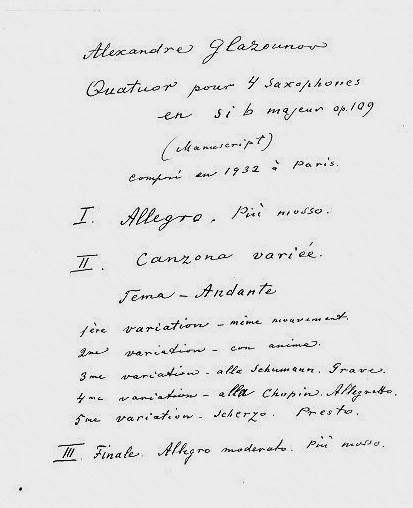 A very interesting detail from this page: Since Glazunov himself assigned the opus number 109 to his saxophone quartet, it is authentic, although the first edition was not published until 23 years after his death. (Unlike Glazunov’s saxophone concerto, composed two years later, but incorrectly assigned, posthumously, also the opus number 109, as the publishing house knew nothing about the still unpublished quartet…)
We were able to identify another manuscript full score in Saint Petersburg, previously considered by some researchers to be the autograph, as merely a copy made by Glazunov’s widow Olga; this manuscript copy nevertheless represents an important additional source.
Through personal contacts, Claus Hierluksch, “primarius” of the Arcis Saxophone Quartet, was able to obtain photos of another extremely interesting manuscript: a full-score copy made by the legendary saxophonist Sigurd Raschèr, who visited Glazunov in 1933 and was allowed to make a copy directly from the autograph (this was, of course, before the days of photocopiers and cell-phone photos).
These two full scores thus represent, in a sense, snapshots of the lost autograph at different points in time: Raschèr’s copy documents an even earlier stage, differing in exciting details from the version known today. For example, the final measures of the second-movement scherzo in Olga Glazunova’s copy and in the first edition read as follows:
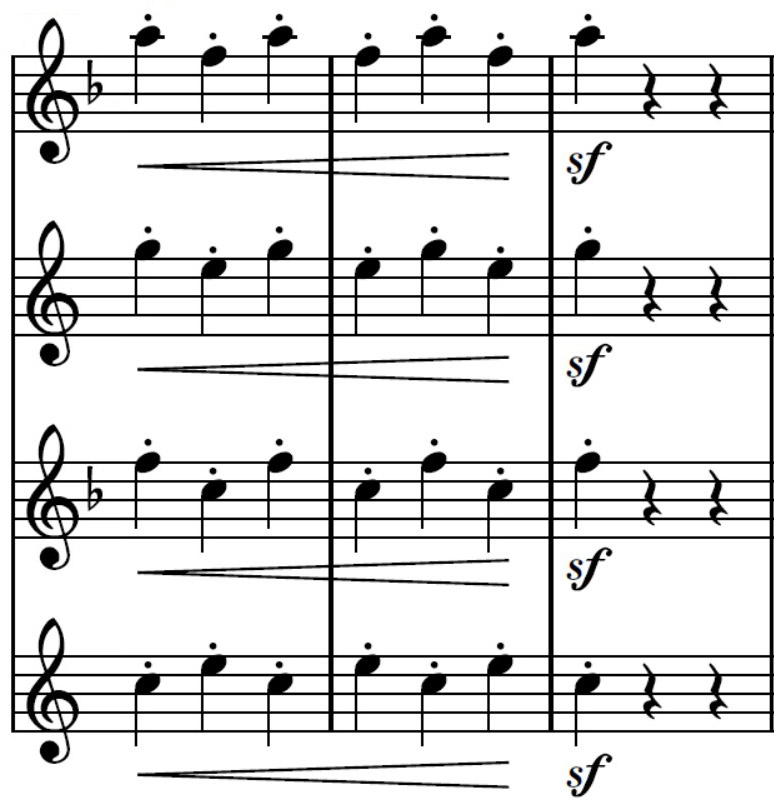
Saxophone Quartet, op. 109, 2nd mvt., mm. 433–435, final version
Raschèr’s copy shows that Glazunov originally wanted to end the scherzo with a witty trill in thirds and/or fourths:
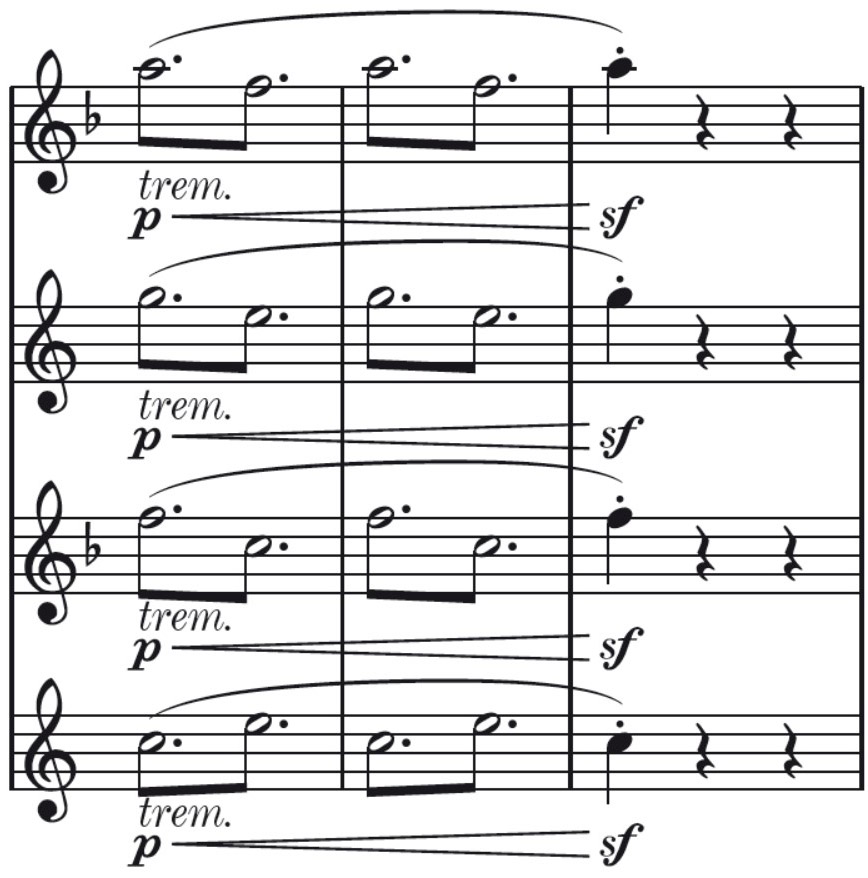
Saxophone Quartet, op. 109, 2nd mvt, mm. 433–435, original version
For Claus Hierluksch, it is quite obvious that this change was made at the request of the Quatuor de Saxophones de la Garde Républicaine, which both commissioned the work and also premiered it in 1933. This legendary saxophone quartet preferred an elegant, classical style of playing without “modernist” effects, using vibrato only very sparingly and selectively. The quartet members must certainly have found the original trill ending too “vulgar”.

French saxophonist Marcel Mule (far left) with his Quatuor de Saxophones de la Garde Républicaine, founded in 1928.
In addition to the music sources, numerous letters from the ensemble to Glazunov from 1932–34 were also evaluated for the first time, providing more detailed insights into the work’s genesis. In his letter to Glazunov of 16 December 1932, Georges Chauvet, the baritone saxophonist and ensemble promoter, reports on the very first reading rehearsal of the new work:
Mon cher Maître,
nous avons eu le plaisir de faire une première lecture de votre quatuor et nous l’avons trouvé fort joli. Nous désirons le revoir encore une autre fois avant de vous en donner une audition, car il n’est par facile, et nous préférons vous faire attendre encore quelques jours afin que cette audition ne vous cause pas de déception pour l’exécution.Dear Maestro,
We had the pleasure of playing through your quartet for the first time, and we found it exceptionally lovely. We would like to rehearse it once more before performing it for you, as it is not easy, and we prefer to ask you to be patient for a few more days so that the execution of this performance does not disappoint you.
This first audition probably took place on 18 December 1932, at the Paris Salle Gaveau, for Chauvet’s next letter, dated 30 December, already mentions it, asking Glazunov for an honest critique of what he heard:
Vous nous feriez bien plaisir en nous donnant votre sentiment sur ce que vous avez entendu, en ajoutant une critique sur les points que vous jugerez, compte tenu évidemment du travail qui reste à réaliser. Ce quatuor nous plaît infiniment, et il sera la plus belle œuvre de notre répertoire.
We would be delighted if you could give us your opinion on what you have heard, adding any criticism of the points you deem important, taking into account, of course, the rehearsal work remaining to be done. We like this quartet immensely, and it will be the most beautiful work in our repertoire.
Chauvet’s very circumspect comments on the interpretation were apparently unnecessary, as Glazunov was completely enthusiastic about the Quatuor Mule’s interpretation, as can be seen from a letter to his friend Jan Wolfman of 11 April 1933: “They played excellently, with a sonorous and original sound.”
Although Marcel Mule and his ensemble frequently performed the work dedicated to them, including on the radio, the Saxophone Quartet, op. 109, was alas never published during Glazunov’s lifetime. The 1959 first edition, which the composer was of course unable to proofread and check, suffers from countless inaccuracies, especially in terms of phrasing, with also several incorrect notes and rhythms, such as here in the final movement, where the alto saxophone must maintain its ostinato rhythm and not be aligned with the soprano saxophone:

Saxophone Quartet, op. 109, 3rd mvt., mm. 281–283, first edition, Bonn, 1959
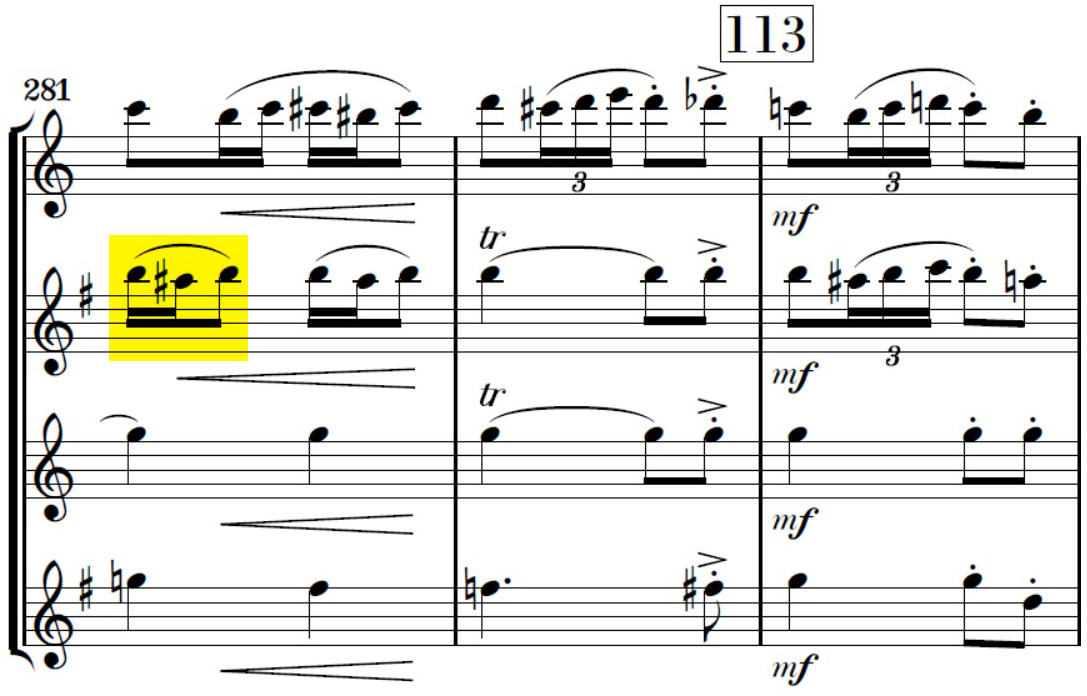
Saxophone Quartet, op. 109, 3rd mvt., mm. 281–283, Urtext edition, G. Henle, 2025
Or this curious oversight, turning Glazunov’s marcato into a musically nonsensical morendo:
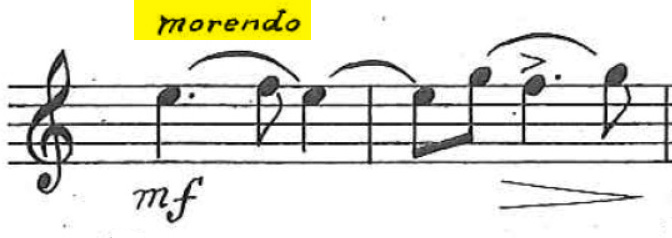
Saxophone Quartet, op. 109, 1st mvt., mm. 185–186, first edition, Bonn, 1959
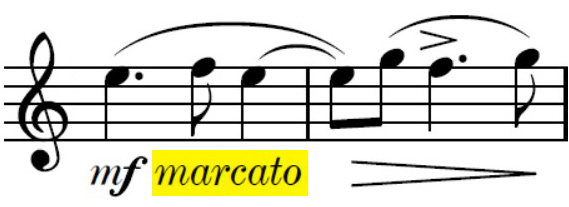
Saxophone Quartet, op. 109, 1st mvt., mm. 185–186, Urtext edition, G. Henle, 2025
All these shortcomings have now been eliminated with the aid of the sources mentioned above, and the saxophone world finally has a reliable new edition of one of the most important works in the repertoire – thanks to the initiative and enthusiasm of the Arcis Saxophone Quartet!
The work on Glazunov’s saxophone quartet began already during my studies with a simple realisation: no reliable music text without reliable sources. At the European Chamber Music Academy, bringing together Europe’s best chamber music ensembles and instructors, this attitude was self-evident. There, we learned not only to play but also to verify notes. Existing for a long time, however, was only a single edition of Glazunov’s work, riddled with errors, some obvious, some less so. So, we searched, compared, and searched further. Where could we find a Glazunov autograph? And then we very quickly brought in probably the best partner to be hoped for: Henle publishing house, in collaboration with its outstanding editor Dominik Rahmer, to whom we owe a great deal.
An early clue led to a location very special to us: Arcisstraße in Munich. It was here that we, as a quartet, first came together at the Hochschule für Musik und Theater München [Munich University of Music and Performing Arts], giving us also the inspiration for our name. And as luck would have it, Glazunov’s daughter lived just a few steps away. Her estate later moved from this Munich archives to St. Petersburg, along with many original documents. There are indications of a version that was probably the final one. Photocopies of the first pages are extant in the former Munich archives, but the original is yet to be found, though we have really searched every nook and cranny, worldwide. We hope that one day it will again come to light.
The decisive factor, however, was that the music text could be reliably reconstructed from all available sources by way of a true detective work. Note by note, source by source, always with the question: What did Glazunov actually intend? Who changed what and where? This meticulous work has now resulted in a Henle edition that takes the Urtext claim seriously, concurrently appearing in an aesthetically superlative music score.
That we were able to realise this new edition with Henle makes me proud. It is moving to hold the result in our hands, knowing that future generations will work with this material. When they open the quartet and read our name on the legendary Henle blue, it will be a dream come true for us, because we will have left something lasting to the music world. Collaborating with Henle is not only an honour for us, but the publishing house’s work is also a pledge to music. Now, finally, also for what is historically, probably the most important work in our genre.
Claus Hierluksch, Arcis Saxophone Quartet