
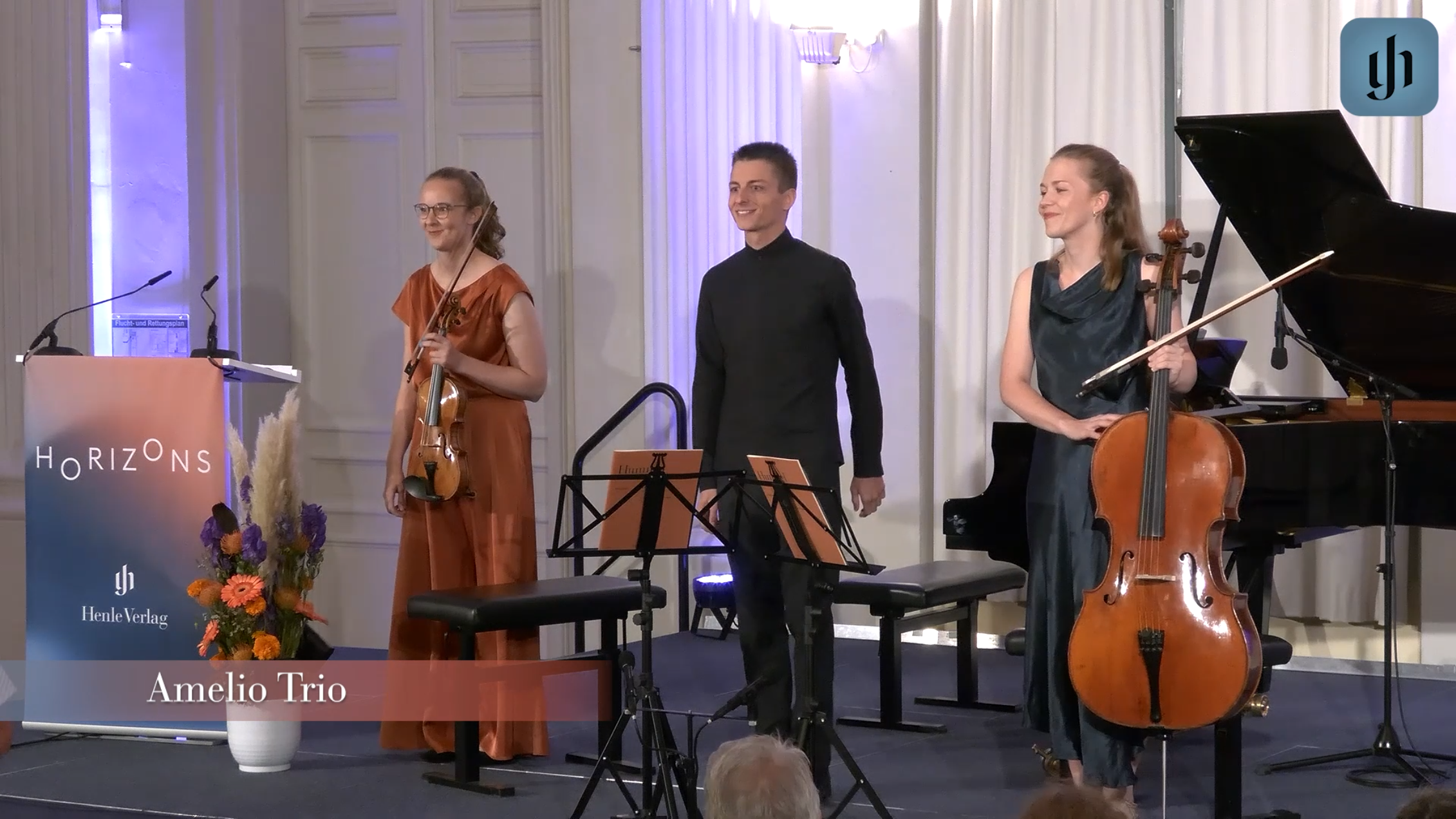
 On 7 October 2026, a very special concert took place in Munich, celebrating for us a pivotal, indeed historic, milestone: the launch of our new imprint, “Horizons”. It marks a turning point, introducing a second colour as a perfect complement to blue, the colour exclusively associated with the Henle publishing house since its inception. What lies behind this, how did it come about, and what decisions had to be taken to get this far? This blog post sheds some light on the process, to be followed by our December 2026 post, offering a “workshop report” of the editorial development of our Horizons editions.
Our founder, Günter Henle, wisely established the publishing house’s core purpose as the publication in Urtext editions of classics from the essential piano- and chamber-music repertoires. This programmatic focus became the recipe for our success. Yet, how often have we had to disappoint musicians who requested titles we were compelled to reject – always for the same reasons: “not part of the core repertoire”, “not a classic”, or “not within the canon”. We long harboured a desire to maintain our primary focus on Urtext editions whilst gaining the flexibility to publish works falling outside that traditional canon.
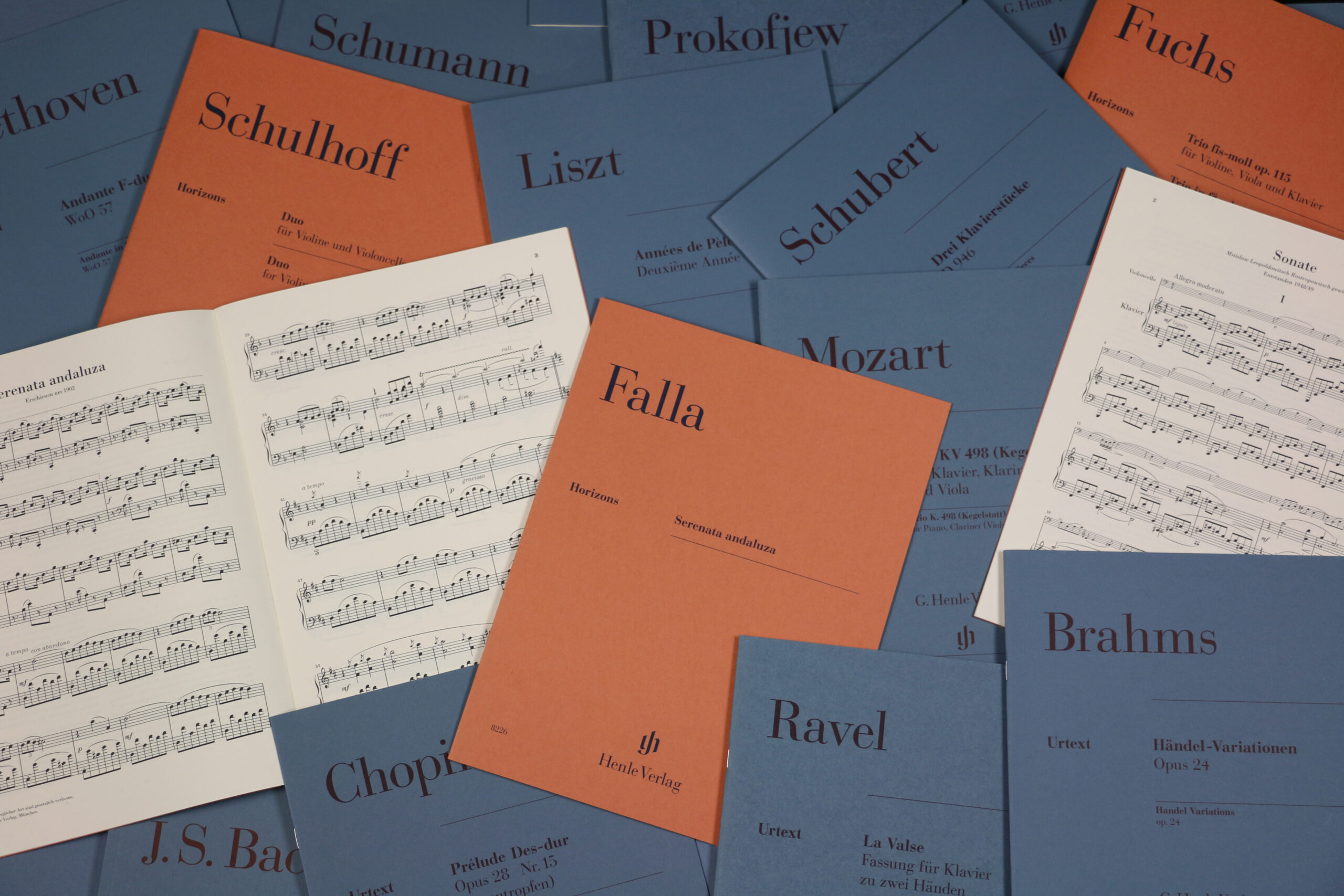 Lists of potential titles for such an expansion already existed and were constantly growing. Over the years, musicians, music retailers – both domestic and international – as well as fans and followers, had provided us with a wealth of fodder for works beyond the established canon. But to transform these ideas into genuine Henle products, we needed a clear strategy.
Our first task was to develop a programme profile: What precisely did we want to focus on from the vast repository of extant music? Three areas quickly emerged where we intend to be active: Discoveries, the first category, consists of music of a quality convincing to us, though not so often performed as the great classics. This category can also encompass titles popular with audiences but representing a “discovery for us” as an Urtext publisher, just because they fall outside the canon of “serious” music (for instance, Vittorio Monti’s pervasive Czardas – a piece difficult to incorporate within a traditional Urtext catalogue). Arrangements, by definition, contradict the Urtext philosophy and the concept of an “original” work. Consequently, we have previously published only arrangements in which one “classical” composer adapted the work of another, resulting in a piece that has itself attained the status of a classic – effectively becoming an original work in its own right (for example, those by Bach/Busoni, Schubert/Liszt). “Ordinary” arrangements – whether historical or contemporary – were excluded. Now, however, we are free to publish such works as Joseph Joachim’s violin and piano arrangement of Brahms’s Hungarian Dances, or Timothy Ridout’s viola transcription of Mozart’s Clarinet Concerto. Finally, there is the whole programme realm of Studies: Pedagogical literature that except for classical etude collections had up to now no place in our Urtext catalogue. We are now altering that as well. Currently being developed, for example, is a completely reconceived series of “orchestral studies”, excerpts for auditions – a repertoire that aspiring orchestral musicians cannot avoid.
But what should be the actual 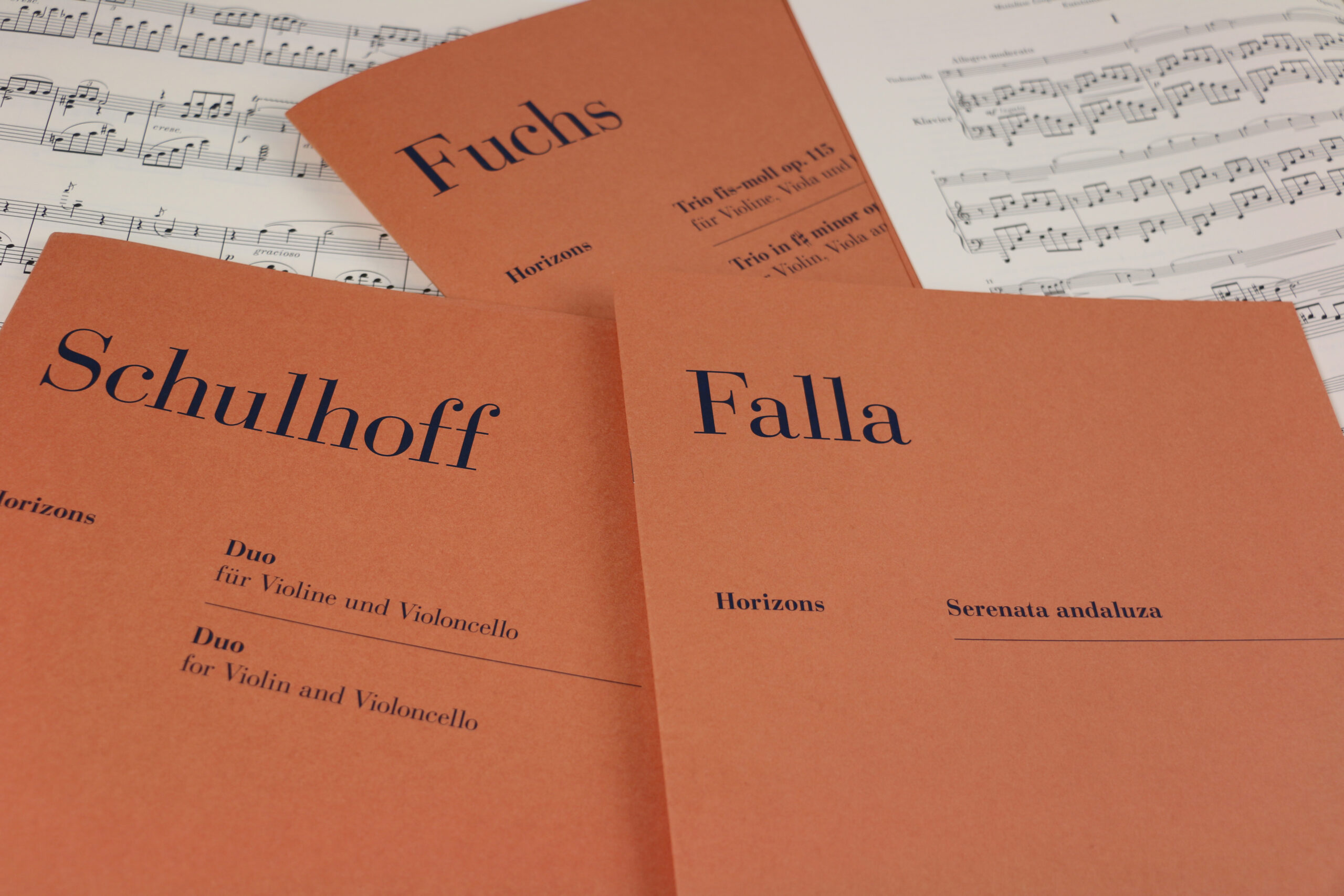 external appearance and internal structure of these new editions, those, that is, going beyond our core classical repertoire? It quickly became clear: We would not want to dispense with any of the features that musicians particularly value in our edition, thus, the complete, worry-free package known as “Henle quality”: first-rate music engraving, perfectly-placed page turns, high-quality paper, and a durable, flexible binding. And, of course, an absolutely reliable and practical music text for performance. What, though, we have chosen to omit in this new imprint is the Critical Report – a hallmark of a traditional Urtext edition. In Horizons we don’t provide a detailed account of the decisions made in editing the music text or the reasoning behind these; there is no comprehensive documentation of a critical apparatus. This saves a significant amount of time during the preparation process, allowing these new editions to be produced on a “fast track” (to quote our publishing-house director, Dr. Norbert Gertsch). This approach also makes it economically viable to publish works that are unlikely to become bestsellers.
 Since, in addition to our Urtext editions, we decided to establish a new imprint as a second pillar, what should it be called? Quickly emerging from the many name ideas and word clouds we explored over the course of several months was the term “Horizons”. The idea of setting off toward new horizons felt like a perfect metaphor for what we aimed to achieve with this new imprint. It almost instinctively evokes the image of a sunrise – a symbol brimming with anticipation, promise, and possibility.
We also wanted the distinction from our Henle Urtext editions to be immediately apparent in the visual design – specifically through colour. We sought something new that would complement the signature “Urtext blue” whilst simultaneously providing a contrast. For many publishing houses accustomed to using a wide, colourful palette, this might not have been a major step; for Henle Publishers, however, it was a quantum leap. After all, few other publishers are so strongly identified as we are with a specific brand colour. Thus, you might imagine that was not a decision we took lightly, but was a long, involved process. Still, we are delighted with the result: a subtle orange, reminiscent of a sunrise. Worth noting is that this specific colour did not exist before: It has no formal name and was developed exclusively for us. I shall never forget the day the first batch of cardstock for the Horizons covers was produced at the Gmund paper mill, once we fine-tuned the nuances of the colour intensity…
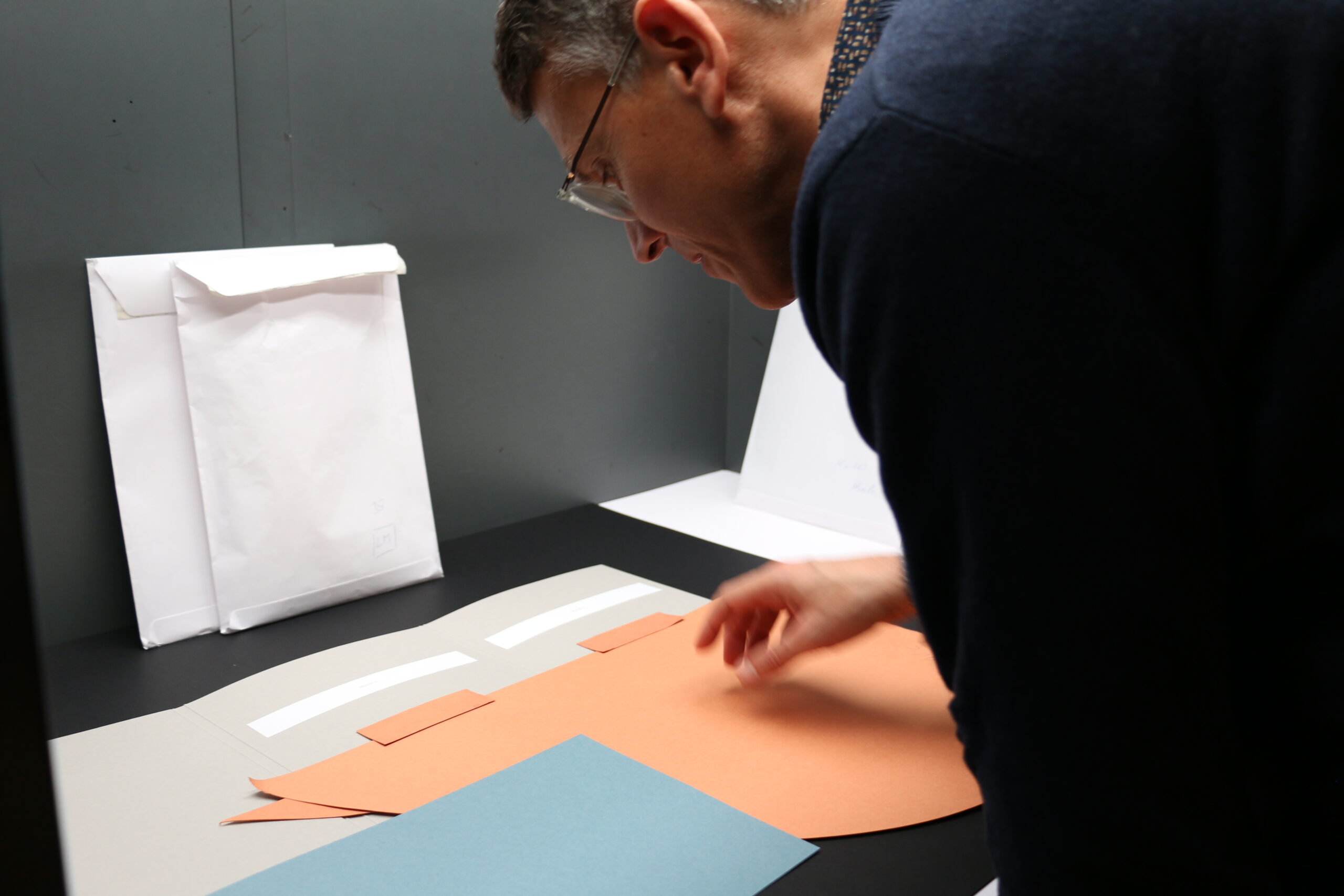
Concept, name, and colour: Defining these “external” factors was crucial. But, of course, most important is the content we publish under the “Horizons” imprint. In December 2026, my colleagues Anja Mühlenweg and Theresa Henkel will share insights into how we prepare our music scores and how this process works in practice. So much, however, can already be said: even with “Horizons”, sources remain essential. And that is the good news for all musicians: We continue to provide in “Horizons” the best possible music text – just as you have always come to expect from our Urtext editions!
At the launch concert on 7 October, the 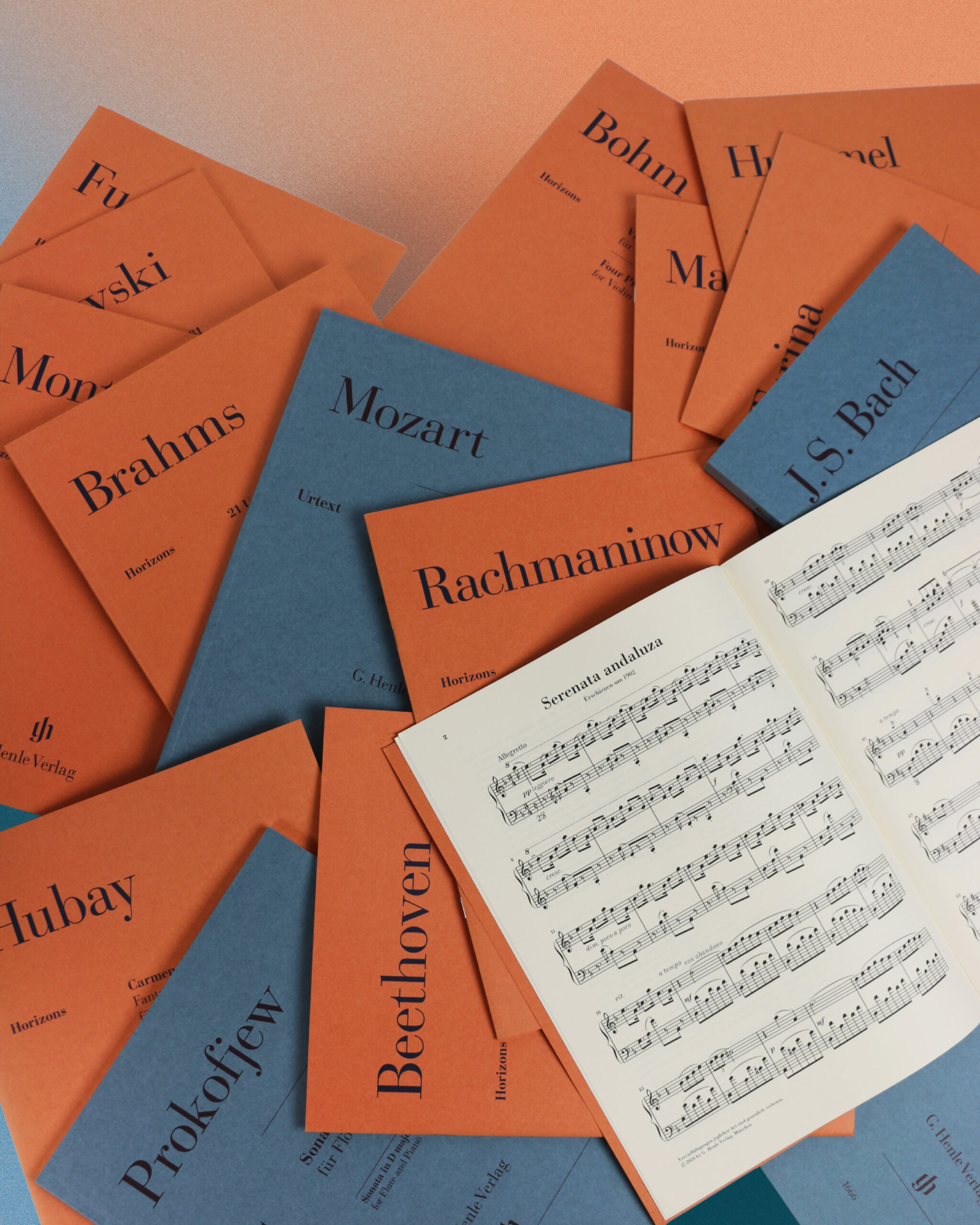 Amelio Trio performed two works from the “Horizons” repertoire (piano trios by Hummel and Turina) in the first half, followed by Dvořák’s third piano trio from our Urtext catalogue. This perfectly encapsulates what you can now expect from us: We remain committed to our core mission of producing our signature blue Urtext editions. At the same time, “Horizons” is introducing the colour orange – a dual approach allowing us to meet the needs of musicians on even more levels than ever before!