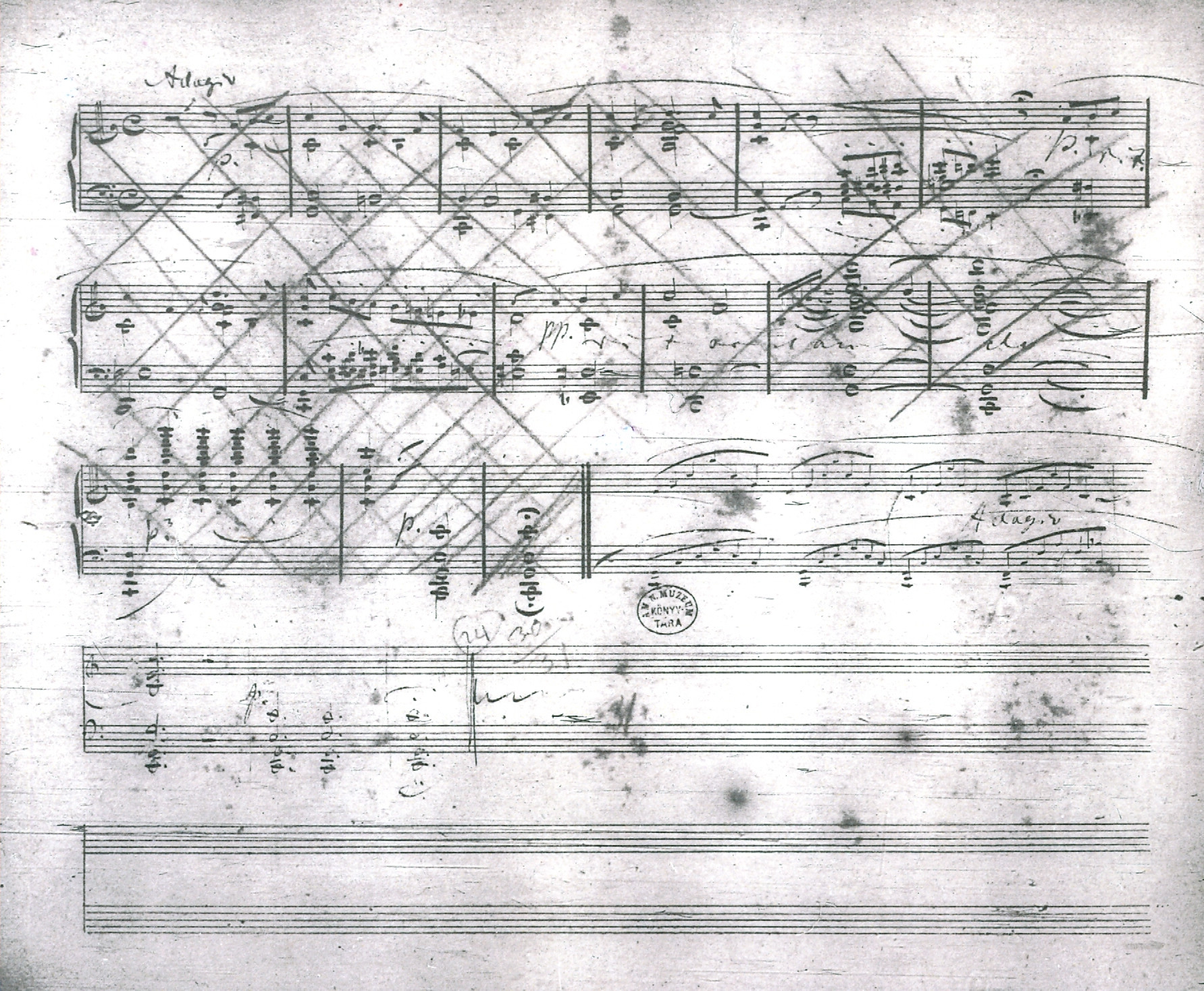
Scriabin plays Scriabin – Is the finale of the 3rd piano sonata too difficult?

Alexander Scriabin (1872–1915) was not only one of the outstanding composers in Russia around 1900. Time and again he also appeared publicly as pianist – especially as interpreter of his own works. His compositions are at present among the standard items in the concert repertoire, but today we can also still get an idea of his piano playing. Continue reading

Posted in Monday Postings, piano solo, Piano Sonata Nr. 3 op. 23 (Scriabin), Scriabin, Alexander | Tagged , , | 8 Comments

The crux of sharp or flat: Just enough cautionary accidentals? or are extras o.k., too?

Our editorial department is always receiving queries from users requesting information on certain passages in the sources: ‘Is it really that way in the autograph?’ or: ‘Is it actually the same in the first edition?’ Continue reading

Posted in Bourrée fantasque (Chabrier), Gnossienne (Satie), Monday Postings, notation, Piano Concerto K. 503 (W.A. Mozart), Piano Sonatina (Ravel), Violin Sonata op. 13 (Fauré) | Tagged , , , , , | 6 Comments

Will versus Caprice. On the the closing measures of Robert Schumann’s C-major Fantasy op. 17

What you can see here is the last page of Robert Schumann’s C-major Fantasy op. 17 is in the handwriting of the copyist Carl Brückner of Leipzig. Continue reading

Posted in autograph, Fantasy op. 17 (Schumann), Monday Postings, piano solo, Schumann, Robert, variant reading | Tagged , , | 7 Comments

‘Play it again’ – is a repeat sign missing in Brahms’ Paganini Variations?

Some time ago we received an interesting query from a pianist who had come across something formally odd in Johannes Brahms’ Variationen über ein Thema von Paganini op. 35. As we know, Brahms too was inspired by Nicolò Paganini’s 24 Capricci op. 1 for violin solo, as were already earlier Schumann and Liszt. Continue reading

Posted in autograph, Brahms, Johannes, first edition, Monday Postings, notation, Paganini Variations op. 35 (Brahms), piano solo | Tagged , , , , , | Leave a comment

“Rock” or “stone”? Schumann’s text changes in “Liederkreis” op. 39 on poems by Joseph von Eichendorff

You know the Lorelei? You know that from the high cliff at St. Goar she peered into the depths of the Rhine (disastrously for many) … But not for Henle in our edition of the Liederkreis op. 39 (HN 550): following a Schumann text revision in Waldesgespräch, Lorelei’s castle is said to be on a “Fels” [rock] – lost, of course, is the Eichendorff “Stein” [stone] rhyming with “Rhein”, but the conciseness of the expression is enormously enhanced. Whether such deviations from a song text model are permissible, rational or as errors to be corrected where possible in a reliable edition, is a much-discussed question that faces any editor of a lieder edition. Continue reading

Posted in autograph, first edition, Liederkreis op. 39 (Schumann), Monday Postings, piano + voice, Schumann, Robert | Tagged , , , | Leave a comment

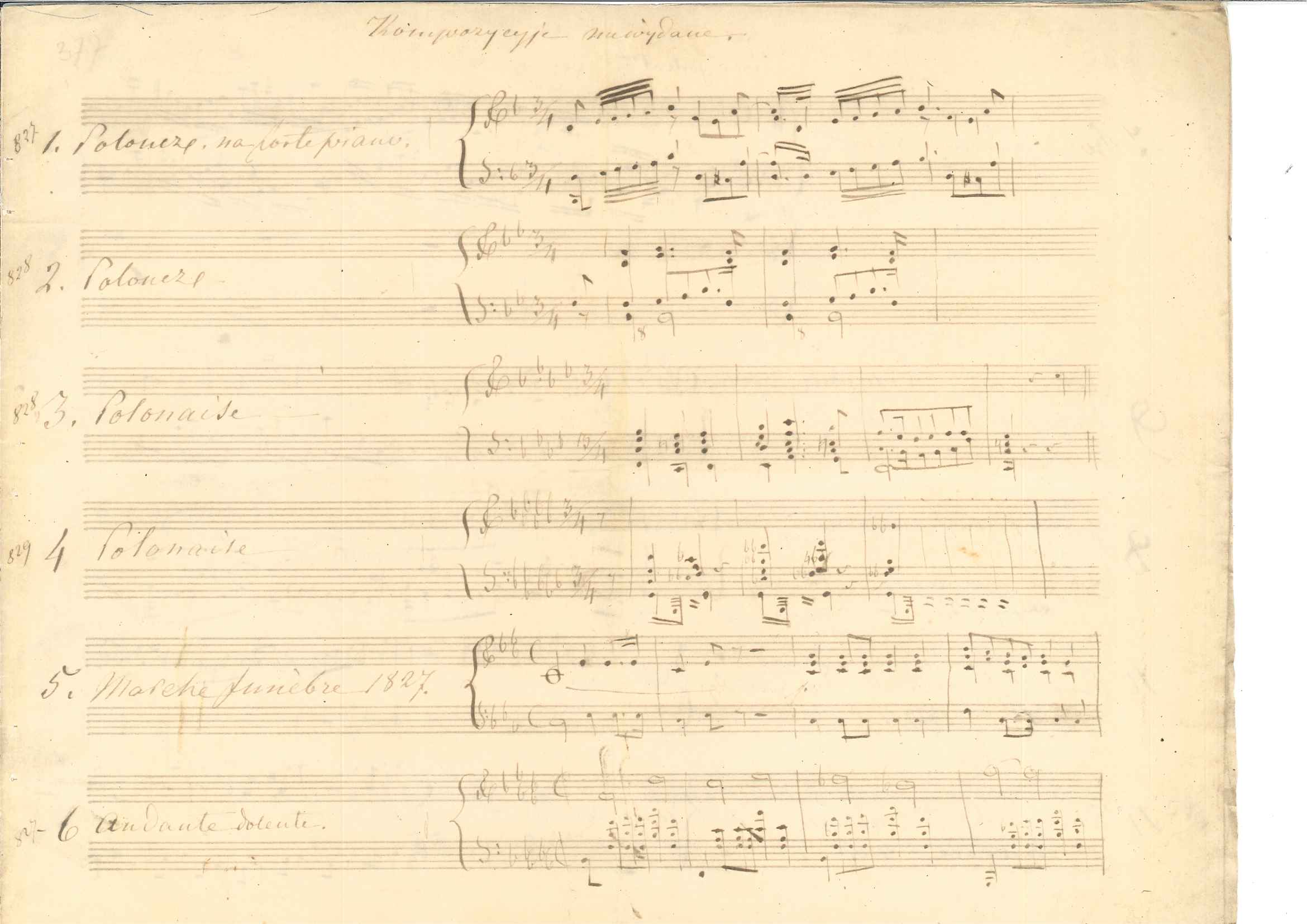
‘Fontana’s version’ – genuine Chopin?

A glance at the table of contents in our Urtext edition of Frédéric Chopin’s Waltzes (HN 131, 230, 9131) may already have put a frown on the faces of many Chopin enthusiasts. Such famous pieces as the Waltzes op. posth. 69 & 70, published only after Chopin’s death, are being offered in two versions: first, in a ‘version according to the autograph’, followed by a ‘version according to Fontana’. Continue reading

Posted in Chopin, Frédéric, Monday Postings, piano solo, Urtext, variant reading, versions, Waltzes (Chopin) | Tagged , , | 9 Comments

Hit and miss? – A purportedly wrong note in Beethoven’s Sonata op. 14 no. 2

For almost ten years now I’ve been working with Murray Perahia as co-editor of a new edition of Ludwig van Beethoven’s piano sonatas. Ten sonatas have appeared meanwhile, and I promise you it won’t take another twenty years to get the other sonatas ready!

Among the already published sonatas is that in G major op. 14 no. 2 (Sonata ‘No. 10’ in case you’d rather count them). Continue reading

Posted in Beethoven, Ludwig van, first edition, Monday Postings, piano solo, Piano Sonata op. 14 nr. 2 (Beethoven), variant reading | Tagged , , | 4 Comments

Going down, coming up or on the up and up? – stumbling block in Erik Satie’s ‘2ème Gymnopédie’

At first sight Urtext editions of Satie’s piano music do not seem to pose any great challenge. Continue reading

Posted in autograph, first edition, Gymnopédie (Satie), Monday Postings, piano solo, Satie, Erik, Urtext | Tagged , , | Leave a comment

Getting the accents right. On the Rondo theme in Schubert’s “Arpeggione” Sonata (3rd movement)

Tabea Zimmermann, the fabulous violist, writes: Continue reading

Posted in accent, Arpeggione Sonata (Schubert), Monday Postings, notation, piano + viola, Schubert, Franz | Tagged , , , | Leave a comment

Debussy: to finger or not to finger…? Why we are adding fingering in the “Études”

In summer 1915 in the solitude of Pourville, the small seaside resort in Normandy, Claude Debussy finished his last major piano work, Douze Études pour le piano. To the 12 etudes in the printed edition that appeared the following year, he prefixed a somewhat curious comment in his inimitable style. Continue reading

Posted in Debussy, Claude, Douze Études (Debussy), Monday Postings, piano solo, Urtext | Tagged , , , , , , | 2 Comments